 Jopy.agency
 On-demand consulting partner
$6,000 AUD per fortnight. Projects can take 2-6 weeks. We'll quote you in our intro call. Pause or cancel anytime.


We audit your business and turn it into LLM-ready data.
Converting your business operations, systems and workflows into AI-optimised documentation.



You're using AI wrong.









What are structured .md files?
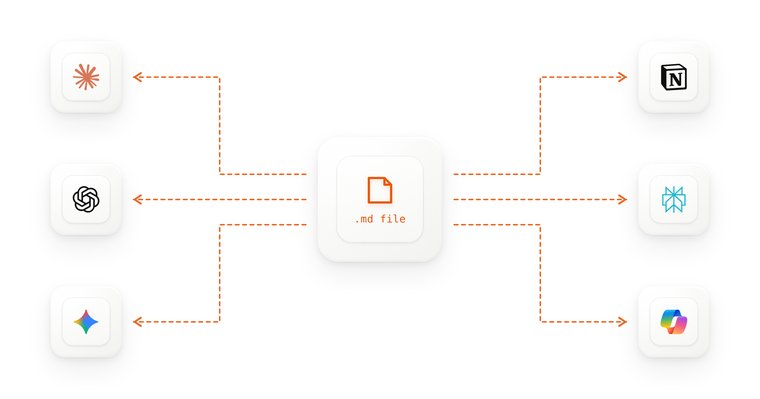
What are structured .md files?
Markdown (.md) is the cleanest and smallest file format that AI likes to read. It's how AI tools were trained to parse information and skills internally, which is why they understand it natively.
Up to 1x more AI efficient.
Our markdown files are living, breathing documents made to perfectly record your operations end-to-end. They self-update as your business changes, come with ongoing support and history-logs built-in, and are up to 200x more efficient than PDF or Word.
Built-in support & tutorials
Every .md file pack ships with human training, onboarding guides, and a self-running tutorial.md file.
Self-updating
Every file edit and business decision is connected to change-log.md. Drop our files in, and every new conversation via AI retains the same context.
Owned by you
Your files are yours forever. No vendor lock-in. No subscription required to keep them, and easy to maintain without a dedicated AI employee.
Our .md file catalogue.
Click any file to see what it does and what your AI unlocks when you give it that context. In our introduction call, we'll pick the ones that will deliver you maximum value.
Foundation
Every engagement includes these five files.
Your onboarding guide. How to use your file pack and get the most from your AI tools.
- • Human-readable walkthrough
- • First-time setup steps
- • Recommended prompts for each file
- • Links to support
A self-running AI tutorial. Drop into any LLM to teach it how to read your file pack effectively.
- • Example prompts that combine multiple files
- • Tips for vertical AI growth
- • Common patterns and recipes for your team
A living history of every update to your file pack. Know what changed, when, and why.
- • Dated entries for every revision
- • Summary of changes per update
- • Reason for each change
- • Rollback notes
The most important file. Without knowing who you serve, your AI generates generic copy and bad advice.
- • Primary segments with named real examples
- • Jobs-to-be-done and what they actually buy
- • Buying triggers and common objections
- • Anti-customers you explicitly do not serve
- • What your customers already believe before they meet you
Things you have already decided. Locked. Stops your AI suggesting alternatives you have ruled out, and saves your team the politics of re-debating closed decisions.
- • Tools you use and tools you reject
- • Channels you do and do not work in
- • Customer types you have ruled out
- • House rules (AU English, no em dashes, etc.)
- • Strategic bets already placed
Cores
Pick the ones that match where your business needs structure. Each ages slowly.
How your business actually runs day-to-day. Not the org chart on paper, the messier truth.
- • Who actually makes which decisions
- • Workarounds and current bottlenecks
- • Systems that exist on paper but no one uses
- • What the team consistently complains about
- • Where things break and how you patch them
Everything money is exchanged for, written for value. Tiers, packages, retainers, exceptions, and the decision tree clients walk through.
- • Every named tier or package with pricing
- • Decision tree clients use to choose
- • Inclusions, exclusions, and boundary cases
- • Discounts, bespoke patterns, and "we used to sell this" history
- • Margin profile and unit economics
What you sound like across every marketing channel. So your AI mimics you, not generic SaaS copy.
- • Five to ten real examples of writing in your voice
- • Banned words and phrases
- • "We always say this" tics
- • "We would never say this" anti-patterns
- • Tone shifts by channel (email vs post vs proposal)
The narrative of why this business exists. Origin, chapters, current moment. Useful for About pages, sales pitches, and social content.
- • Founder origin and the moment the business started
- • Major chapters and turning points
- • What you stand for
- • Why you do this and not something else
- • Where the story is heading
What you are working toward this quarter. Refreshes every 90 days so your AI is never operating on stale information.
- • Current quarter (Q1 Jan-Mar, Q2 Apr-Jun, Q3 Jul-Sep, Q4 Oct-Dec)
- • The 3-5 priorities right now
- • What launched recently and what is about to
- • What broke last month
- • What the founder is fixated on this season
Electives
Specialised files for businesses that need them. Some require ongoing maintenance.
Your repeatable sales motion documented end-to-end. Most useful if you already have one.
- • Lead sources ranked by quality
- • Qualification criteria and intro-call structure
- • Objection patterns and proven responses
- • Follow-up cadence and close mechanics
Direct and indirect competitors mapped. Useful when positioning matters more than execution.
- • Named direct and indirect competitors
- • Where you win and where you lose
- • Market gaps you exploit
- • Anti-positioning rules (what to never claim)
Every tool you run, mapped and assessed. Most useful for tech-heavy businesses.
- • Full inventory with costs and owners
- • Integration map and data flow
- • Gaps and pain points
- • Replacement and automation candidates
Every customer touchpoint from awareness to renewal. Useful when CX is the lever.
- • Awareness, consideration, purchase, onboarding, retention, churn
- • Touchpoints and emotions at each step
- • Friction points and abandonment patterns
- • Renewal triggers and referral moments
Who is on the team, what each person actually does (vs job title), strengths, dynamics, who is the bottleneck.
- • Real roles vs job titles
- • Individual strengths and constraints
- • Decision rights per person
- • Team dynamics and informal hierarchy
- • Hiring plan and known gaps
Cash reality. Payment terms, debtors, recurring vs project revenue, runway. Required for AI to help with pricing decisions.
- • Revenue by stream and trend
- • Payment terms and debtor profile
- • Cash position and runway
- • Fixed vs variable cost structure
- • Pricing rationale per offer
A registry of every piece of content the business has produced. Lets AI reference past content when writing new content.
- • Published content with dates and channels
- • Performance signals per piece
- • Topics already covered
- • Content gaps and opportunities
- • Repurposing candidates
Key relationships outside the team: suppliers, contractors, referral partners, integration partners.
- • Named suppliers and what they provide
- • Referral partners and the deal
- • Integration partners and dependencies
- • Backup options per critical relationship
- • Commercial terms and renewal dates
Custom
Need something bespoke? Scoped on the intro call.
Need something specific to your business? We can scope a bespoke audit on the call.
- • Compliance and risk documentation
- • Industry-specific operating playbooks
- • Bespoke decision frameworks
- • Anything else worth recording
Free .md example files.
Check out the power of structured .md files with our free example .md files. Universal files that work with any business, optimised for TikTok, Instagram, Facebook, LinkedIn, and X. Drop them into your AI tool and get immediate value.
Universal content guardrails any small business can drop into ChatGPT or Claude to get instantly better social posts.
# Social-Media-Rules.md
## Universal social media content rules for any small business

> **For AI tools:** read this entire file before responding to any social media request. The first-contact protocol below is mandatory. Do not generate content until those questions are answered or skipped because the answers are obvious from context.

---

## What this file is

A drop-in rules file for any small business that wants better AI-generated social media content. Works with ChatGPT, Claude, Gemini, Copilot, or any LLM that reads markdown.

Use it like this: paste this file into your AI chat first, then ask for content. The AI will run an intake before generating, then produce posts that sound like a real Australian small business owner, not a corporate brand bot.

Built by jopy.agency (Sydney, AU).

---

## First-contact protocol (MANDATORY before generating ANY content)

When the user asks for a social media post, story, caption, hashtag set, or batch, you MUST ask the following questions in order. Combine them into one short message. Skip questions 5, 6, and 7 if the answers are obvious from the user's prompt or any attachments.

**Always ask:**

1. **What platform is this for?** (TikTok, Instagram, Facebook, LinkedIn, X, or multiple)
2. **What business are you in?** (so I can match your voice and audience)
3. **What is the goal of this post?** (awareness, engagement, sale, response to news, event, announcement)
4. **Do you want me to search for current trends on this platform first?** If you have web search available, offer to look up what's trending on the named platform (sounds, formats, hashtags, conversations) before generating. Only do this if web search is genuinely available to you in this conversation.

**Ask only if not obvious from context:**

5. **Do you have any image, video, or photo attachments I should write around?**
6. **How many posts do you need?** (default: just one. Ask before producing more than three.)
7. **Anything specific I should mention?** (offer, date, customer name, recent event, location)

After the user answers, generate. Do not ask follow-up questions unless something they said is genuinely ambiguous.

---

## Trend research instruction

When the user has agreed to a trend search (question 4 above), perform a real web search using whatever tool you have available (Claude web search, ChatGPT browse, Gemini live, Perplexity, etc.). Look for:

- Currently trending sounds or audio on the platform (TikTok and Instagram Reels)
- Hashtags that are gaining momentum vs ones that are saturated
- Format conventions of the moment (carousel vs single image vs Reel)
- Conversation topics in the user's industry that are heating up this week or month
- Australian-specific trends if the user is targeting an AU audience

Synthesise the findings into two or three concrete observations. Do not paste raw search results. Then ask the user which trend angle they want to use, or proceed to generate using the strongest one.

If you do not have web search available, say so plainly: "I don't have live web access in this conversation. I can generate based on general best practices, but you may want to check what is currently trending on the platform before posting." Do not invent trends or fabricate hashtag performance data.

---

## Channel-specific rules

### TikTok

**Hook:** The first 1.5 seconds determine watch-through. Open with a question, a surprising statement, a visual gag, or a stop-scroll moment. Never open with "Hi guys" or any greeting.
Generic customer service response patterns for the five most common SMB scenarios. Drop in and the AI writes in your voice without sounding scripted.
# Customer-Reply-Templates.md
## Universal customer reply patterns for any small business

> **For AI tools:** read this entire file before drafting any customer-facing reply. The first-contact protocol below is mandatory. Do not write a reply until those questions are answered or skipped because the answers are obvious from context.

---

## What this file is

A drop-in reply file for any small business that wants AI-drafted customer responses that sound human, local, and matched to the situation. Works with ChatGPT, Claude, Gemini, Copilot, or any LLM that reads markdown.

Use it like this: paste this file into your AI chat first, then paste in the message you need to reply to. The AI will run an intake before generating, then produce a reply that sounds like a real small business owner, not a help-desk bot.

Built by jopy.agency (Sydney, AU).

---

## First-contact protocol (MANDATORY before drafting ANY reply)

When the user asks for a customer reply, you MUST ask the following questions in order. Combine them into one short message. Skip questions 4, 5, and 6 if the answers are obvious from the user's prompt or the message they pasted.

**Always ask:**

1. **What channel is this reply for?** (Email, DM on Instagram or Facebook, public review on Google or Facebook, SMS, in-person follow-up note)
2. **What is the customer's tone?** (Positive and happy, neutral and informational, frustrated, angry, unsure)
3. **Have they bought from you before?** (New prospect enquiring, existing customer with a current order, repeat customer, lost customer reaching back out)

**Ask only if not obvious from context:**

4. **What is the topic of the message?** (Price enquiry, complaint about a product or service, praise, refund request, scheduling question, referral or recommendation question, generic enquiry)
5. **Do you want a one-shot reply, or a multi-step conversation framework?** (Single reply that closes the thread, or a back-and-forth pattern that handles multiple turns)
6. **Any specific facts to include?** (Order number, date, amount, names, deadlines)

After the user answers, generate. Do not ask follow-up questions unless something they said is genuinely ambiguous.

---

## Six universal reply patterns

### Pattern 1: Positive review reply

**When to use:** Google review (4 or 5 stars), Facebook review (4 or 5 stars), Instagram comment praising the business, positive DM.

**Structure:**
1. Thank them by first name only. (Reviews on Google show first names; on Facebook, full names are visible.)
2. Acknowledge the specific thing they said. Pull out one detail from their review and reflect it back.
3. One sentence of warmth. No business plug, no promotional add-on.
4. Sign off with first name (yours or the business owner's).

**Channel adjustments:**
- Google review: 1 to 2 sentences. Public visibility matters; future customers will read this.
- Facebook review: 2 to 3 sentences. Slightly warmer because Facebook is more conversational.
- Instagram comment: 1 sentence + emoji if your brand uses them.
- DM: more casual, can be 2 to 4 sentences.

**Australian tone:**
- "Thanks so much, [name], really kind of you to take the time."
- "Cheers, [name], glad we could help out."
- Avoid: "We strive to..." "We are passionate about delivering..." (both sound corporate).
Ready to talk?
All engagements start with a no commitment, 15-minute introduction call. We discuss your business (horizontal analysis) and confirm what you need to unlock vertical AI growth together.

Our process.
From discovery to delivery.
Mapping how your business actually runs today.
Turning that picture into clear structure.
Packaging everything into useable form.
Handing it off so your team can run with it.
Scope Definition
Agree what's in, what's out, and what success looks like before any work starts.
Business Audit
A structured walk through how your business operates today, end-to-end.
Stakeholder Interviews
Conversations with you and key team members to surface what no document captures.
Mapping how your business actually runs today.
Scope Definition
Agree what's in, what's out, and what success looks like before any work starts.
Business Audit
A structured walk through how your business operates today, end-to-end.
Stakeholder Interviews
Conversations with you and key team members to surface what no document captures.
Our advantage.
Benefits of our auditing.
Change how you work with AI via structured LLM files that have been perfectly curated for you.

AI becomes your strategist
Drop in Customer-Profile, Competitors, and Story. Your AI now reasons about who you serve, where you win, and what you stand for. Stops giving you generic positioning advice.

AI becomes your content writer
Drop in Brand-Voice and Customer-Journey. Posts, emails, proposals come out in your voice, for your customers, at the right stage of their journey. Sounds like you wrote it.

AI becomes your technical operator
Drop in Operations, Value-Offerings, and Tech-Stack-Audit. Your AI understands how the business runs, what you sell, and the tools you use. Suggestions fit your reality.


“The LLM-ready documentation he produced gave us clarity we didn’t know we were missing.”

Hey 👋
I'm Peter Jopy
I'm a multi-disciplinary consultant, writer, designer and developer from Sydney, Australia, I formally studied a Bachelor of UX and Web Design.
There's a serious gap between how smaller businesses actually operate and the standard consulting model.
Generative AI is levelling the playing field faster than most people realise, but the tools are only as good as what they know about your business context. That's what led to Jopy.agency.
You will work directly with me. Every meeting, every document, every recommendation.
Find me writing on designand.dev, personal/projects on peterjopy.com, or on most socials under @peterjopy.
Connect with me!
I'm a multi-disciplinary consultant, writer, designer and developer from Sydney, Australia, I formally studied a Bachelor of UX and Web Design.
There's a serious gap between how smaller businesses actually operate and the standard consulting model.
Generative AI is levelling the playing field faster than most people realise, but the tools are only as good as what they know about your business context. That's what led to Jopy.agency.
You will work directly with me. Every meeting, every document, every recommendation.
Find me writing on designand.dev, personal/projects on peterjopy.com, or on most socials under @peterjopy.